This Human-Centric Digital Twins webinar, developed in collaboration with AnyLogic, examines a familiar industrial question: why can a simulation look right while the operation still behaves differently? The answer often lies in the work that conventional models simplify: human decisions, timing variation, and operator interaction with the process.
Watch the full webinar to see how a Human-Centric Digital Twin can bring system logic and human behaviour into the same decision environment.
Explore EmaaBlue’s AnyLogic and anyLogistix capabilities for simulation-led industrial decision-making.
Where conventional simulation stops
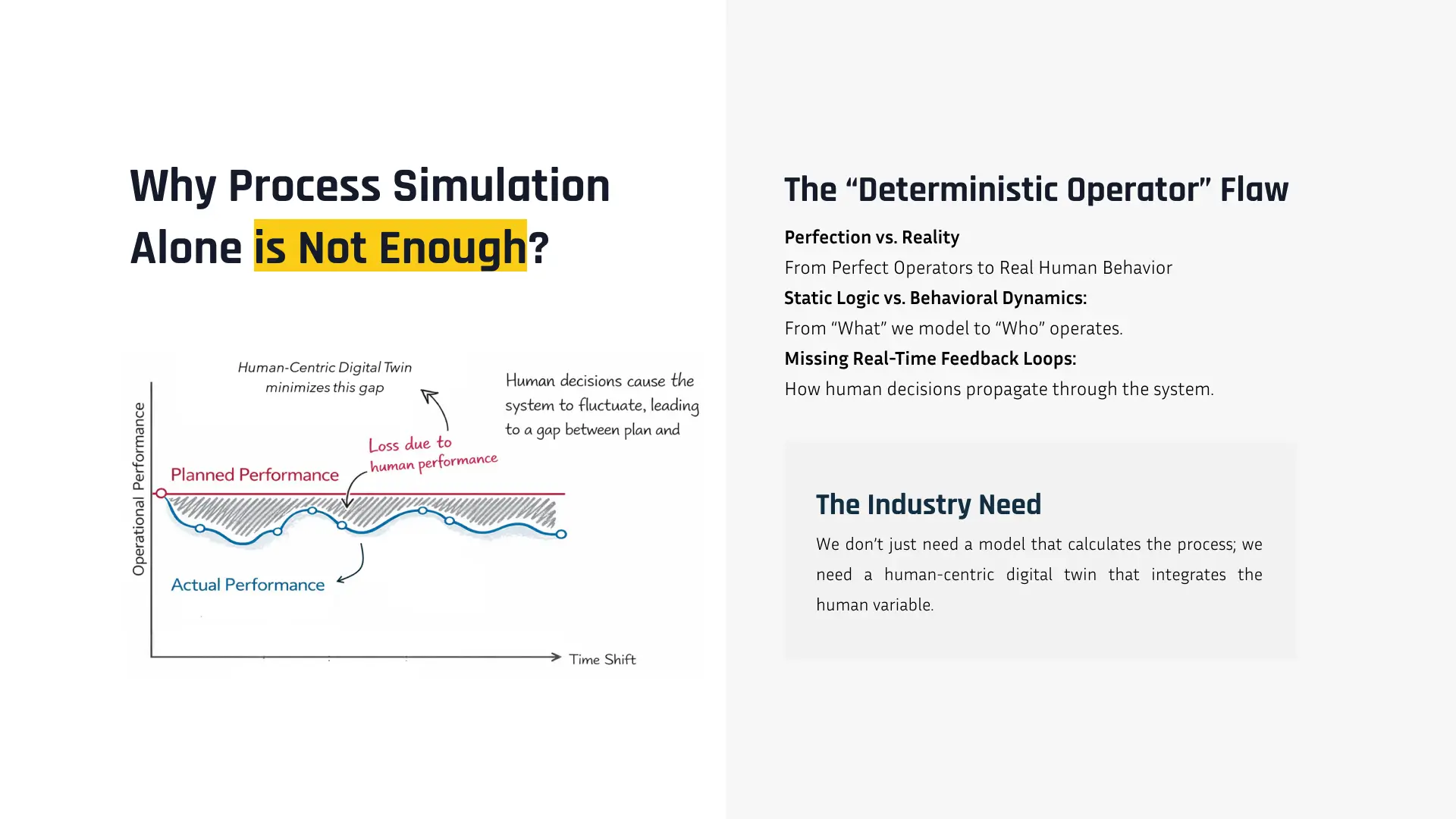
Process simulation helps teams test capacity, throughput, and operating rules before changing the physical system. Yet many models assume consistent operator execution. In a real plant, a short handling delay, a different response to a quality issue, or a mistimed transfer can create back-pressure, idle equipment, and downstream disruption.
That does not make the simulation wrong. It means the model may be missing a part of the operating system.
Bringing people into the digital twin
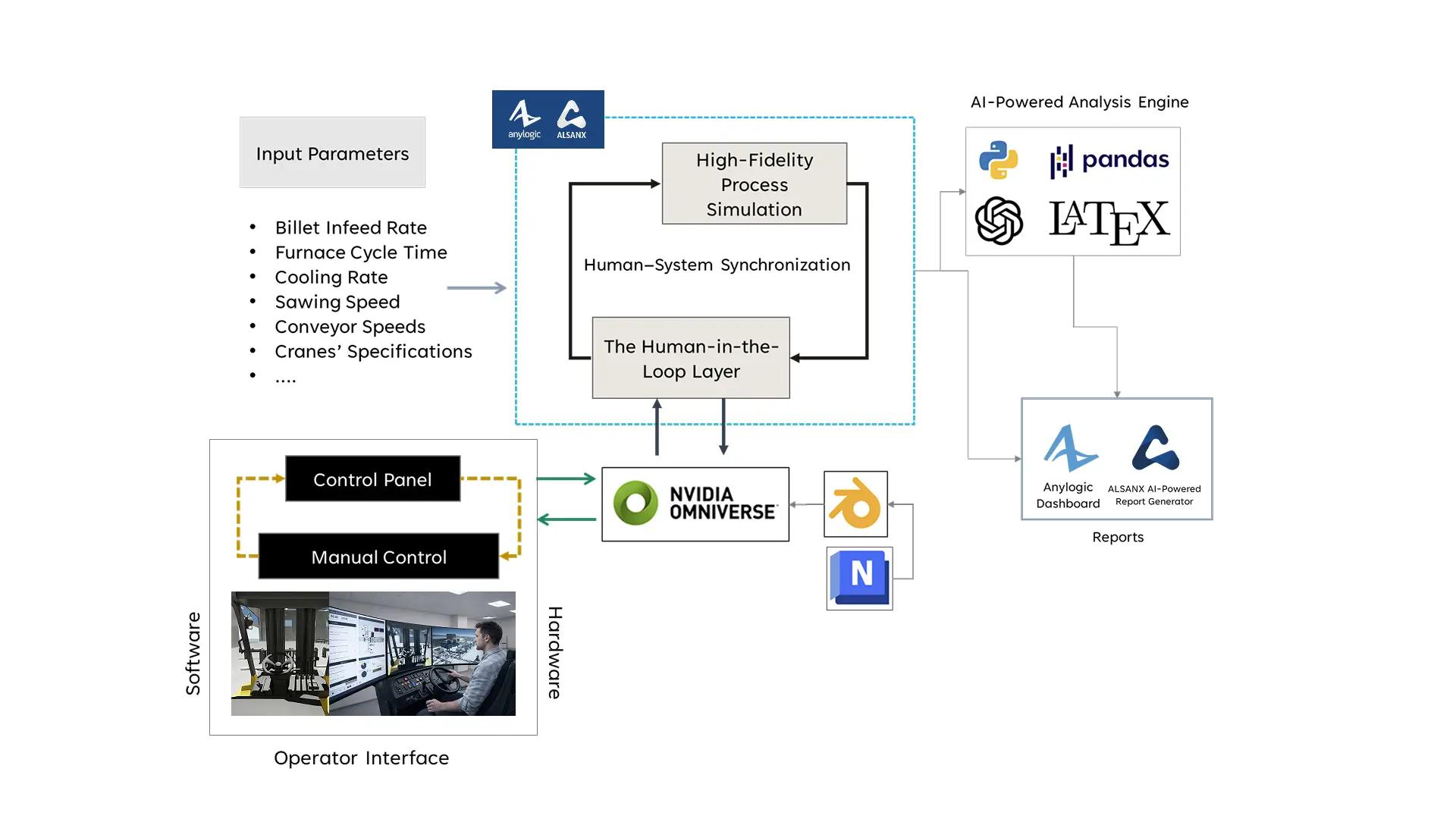
The webinar uses a continuous homogenizing line in aluminum production to show the point. The line is highly automated, but material handling and timing coordination still rely on operators. Removing a defective billet late or changing the transfer sequence can affect both upstream and downstream stages.
From model to digital laboratory
Rather than testing a single ideal scenario, engineers can vary arrival patterns, furnace timing, quality rates, and material-handling rules. The same environment can support energy and CO₂ analysis. It becomes a digital laboratory for studying what the system does when conditions are imperfect.
In training mode, participants interact with constrained objects and guided scenarios. The goal is not an abstract demonstration. It is a setting where people can try, fail safely, and understand the operational effect of their actions.
AI, visualization, and the next step
Combining simulation and training creates a rich operational record. AI can help interpret it by identifying inefficiencies, recognizing patterns, and comparing performance under comparable conditions. The role is explanatory support, not a replacement for engineering judgment.
The webinar also discusses immersive visualization through NVIDIA Omniverse and VR, giving operators, analysts, and decision-makers different ways to explore the same system. For additional context, read the original EmaaBlue article on human-centric digital twins.
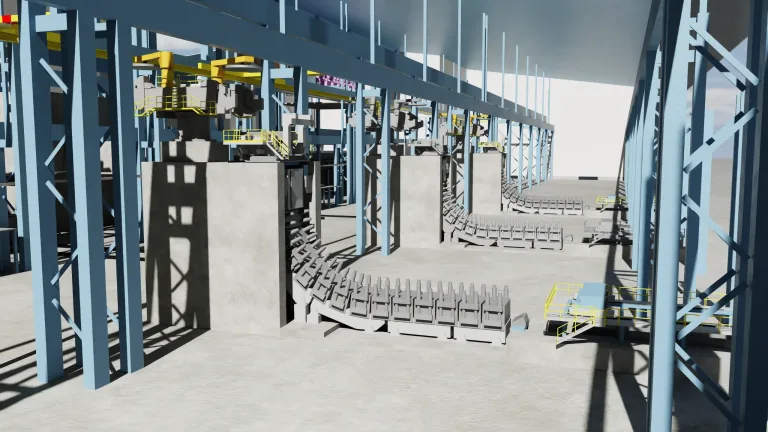
Synchronizing Steel: AI-Driven Scheduling for Next-Gen Meltshops
Transforming complex EAF-CCM interactions into seamless, automated production flows with real-time digital twin simulation and predictive analytics.
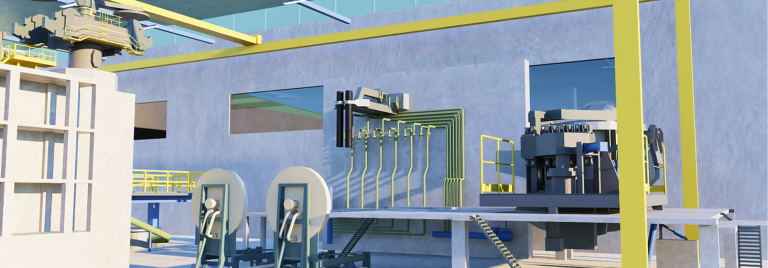
Bridging the Gap Between Engineering and Reality
A revolutionary VR Digital Twin for steel manufacturing that transforms complex industrial simulations into immersive, risk-free environments for rapid design validation and elite training.
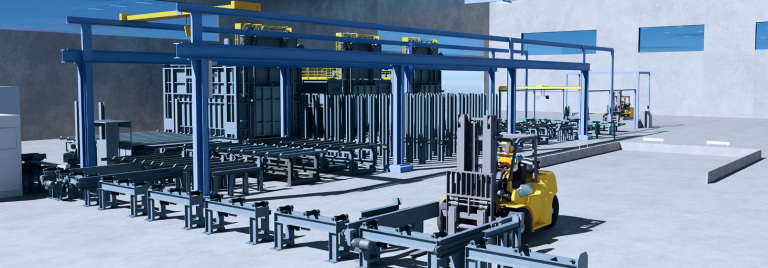
Scaling Industrial Output Through Dynamic Engineering Validation
De-risking capacity expansion by simulating material flow, equipment utilization, and real-world operational scenarios before the first brick is laid.