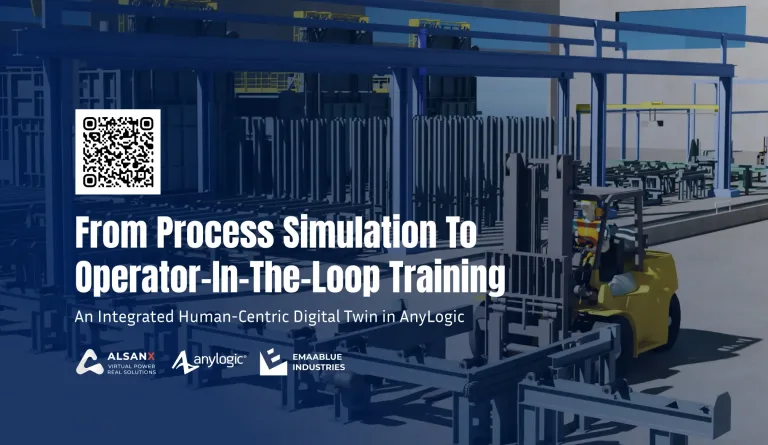
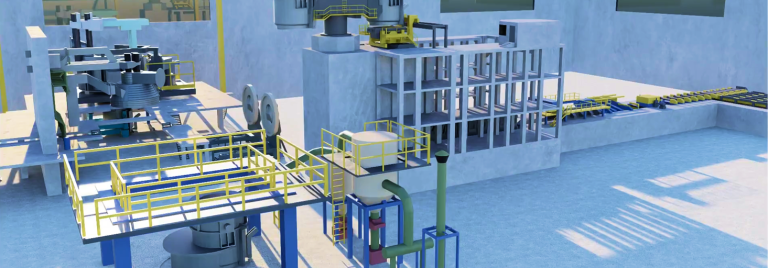
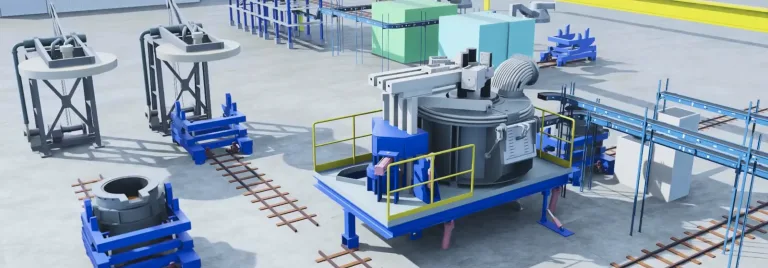
**IMAGE PROMPT (FEATURED, 16:9): High-fidelity steel meltshop digital twin viewed from an elevated three-quarter angle, electric arc furnace, ladle furnace, overhead cranes, transfer cars and continuous casting line represented in a credible industrial 3D environment, subtle blue operational-data overlays, clean white, blue and navy EmaaBlue visual language, no text, no logo, no watermark | Suggested alt text: Steel meltshop digital twin with furnaces, cranes and continuous casting**
This steel production digital twin webinar was presented at the AnyLogic Conference. AlsanX presented a technical session on a steel-production digital twin built for the scheduling and coordination problems inside a multi-stage meltshop. The presentation combined AnyLogic simulation, NVIDIA Omniverse visualization and Python-based AI analytics in one decision environment. View the original AlsanX presentation page.
The focus is practical. Electric arc furnaces, ladle treatment, vacuum degassing, overhead cranes and continuous casting do not operate as isolated systems. A delayed ladle movement or crane conflict can propagate into idle time, temperature loss and a disrupted casting sequence. The model lets engineering teams test those dependencies before changing the live plant.
What the session covers
Why meltshop coordination needs a digital twin
A meltshop contains both discrete and continuous behaviour. Furnaces and refining stations work through individual heats, while the caster needs a stable flow. The coupling between the two is where many planning assumptions fail. A smart meltshop optimization project can make that coupling visible by testing the sequence, resource conflicts and operating rules together.
The same model can support decisions beyond production scheduling. Teams can review crane capacity, transfer timing, process interruption and the operational consequences of alternative targets. For energy-intensive steelmaking, scenario-based analysis also supports the questions addressed in EmaaBlue’s steel energy optimization project.
Watch the presentation
The recording shows the simulation model, the Omniverse 3D view, interactive parameter changes and the AI-assisted reporting flow. It is intended for steelmaking leaders, process engineers, planning teams and digital-transformation owners who need to examine a complex production system before committing to an operational change.
**IMAGE PROMPT (INLINE, 16:9): Close view of a steel plant operator using a VR headset in a realistic digital training environment, furnace and overhead crane visible in the simulated scene, professional industrial setting, clean white, blue and navy EmaaBlue visual language, no text, no logo, no watermark | Suggested alt text: Operator training in a virtual steel plant digital twin**
Steel meltshop digital twin presentation slides
Download the official presentation deck covering the simulation, Omniverse visualization and AI reporting workflow.
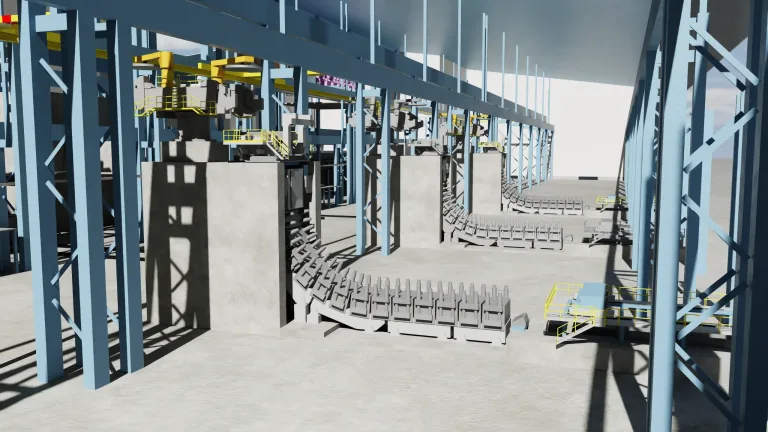
Synchronizing Steel: AI-Driven Scheduling for Next-Gen Meltshops
Transforming complex EAF-CCM interactions into seamless, automated production flows with real-time digital twin simulation and predictive analytics.
Mastering Meltshop Operations Through Digital Twin Training
Empowering your workforce with high-fidelity simulations to eliminate operational risks and bridge the industrial talent gap.
Decarbonizing Steel Production via Digital Twin Intelligence
Empowering meltshop managers to reduce energy consumption and CO2 emissions through scenario-based simulation and real-time AI reporting.