
Scaling Industrial Output Through Dynamic Engineering Validation
De-risking capacity expansion by simulating material flow, equipment utilization, and real-world operational scenarios before the first brick is laid.
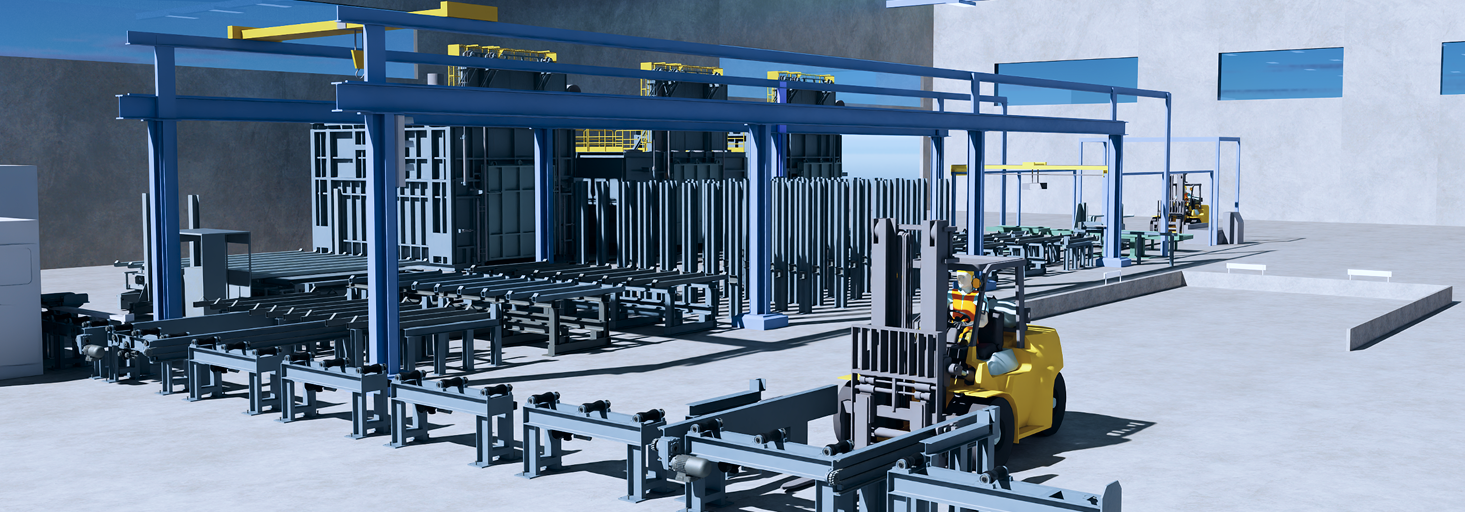
Eliminating Uncertainty in Industrial Scaling
When industrial SMEs scale, the transition from static engineering drawings to a living, breathing production line is where the highest risks reside. EBI SIM bridges this gap by creating a high-fidelity dynamic simulation of the production environment. By modeling the entire line—from billet-size variations to crane scheduling—we provide a “flight simulator” for factory managers, ensuring that capacity expansion translates into actual throughput rather than new bottlenecks.
This project specifically addressed the complexities of heavy material handling. By integrating AnyLogic simulation software with industrial expertise, we validated time studies and equipment performance under peak loads. The result is a streamlined, future-proof facility layout where every movement is optimized for maximum efficiency and worker safety.
Challenges · Solution · Results
- Unseen Bottlenecks: Capacity expansion risks creating congestion points that static spreadsheets cannot predict.
- Validation Gaps: Traditional engineering reviews often fail to account for the variability of downtime and peak load cycles.
- Complex Material Handling: Coordinating overhead cranes and transfer tables manually leads to idle time and safety risks.
- Dynamic Flow Modeling: Developed a full-line simulation to assess expanded capacity and spatial constraints in real-time.
- Scenario Stress-Testing: Modeled diverse operating conditions, including varied billet sizes and scheduled/unscheduled downtime.
- Automated Logic Optimization: Applied advanced algorithms to detect the most efficient crane paths and material transfer sequences.
- Risk-Free Expansion: Confirmed the facility could operate at peak expanded capacity without a single blockage.
- Data-Driven Planning: Provided a reliable roadmap for production scheduling based on dynamic scenario analysis.
- Optimized ROI: Identified specific handling improvements that reduced equipment wear and energy consumption.
In-Depth Documentation
Background & Strategic Goals
The primary objective was to transform a static engineering plan into a validated operational reality. For energy-intensive SMEs in the metallurgy sector, capital expenditure on expansion is a high-stakes move. Our goal was to provide the client with a digital environment where they could “fail fast” and “optimize early.” By focusing on the “Bringing Talents Back to Industry” manifesto, we ensured the simulation was not just about machines, but about providing operators and managers with the decision-support tools they need to manage a more complex, high-output environment.
Implementation & Methodology
Leveraging the EBI Platform’s simulation pillar, we utilized AnyLogic to build a detailed 3D digital twin of the material handling area. We began by importing architectural renderings of conveyor racks and gantry systems, then layered in operational logic. We conducted iterative “what-if” sessions with the client’s engineering team, testing how the system handled peak loads and equipment failures. This agile approach allowed us to move from initial data collection to a fully validated simulation model in under a month, providing immediate strategic value.
Tools & Technologies
Explore More Projects

Transform Industrial Sales with EBI TWIN+ Interactive Showrooms
Bridge the gap between engineering and sales with an immersive 3D environment that allows clients to customize complex assets in real-time, reducing the need for physical prototypes.
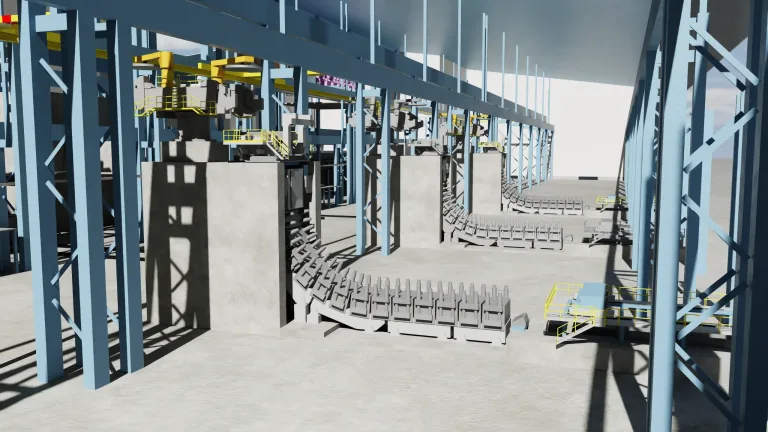
Synchronizing Steel: AI-Driven Scheduling for Next-Gen Meltshops
Transforming complex EAF-CCM interactions into seamless, automated production flows with real-time digital twin simulation and predictive analytics.
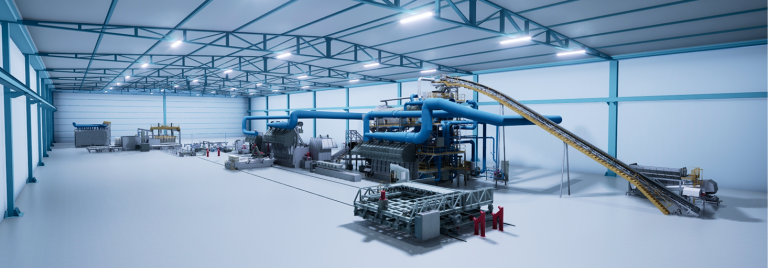
Revolutionizing Aluminum Recycling with Interactive Digital Twins
Bridging the gap between complex metallurgical engineering and intuitive 3D exploration to accelerate sales and optimize plant design.
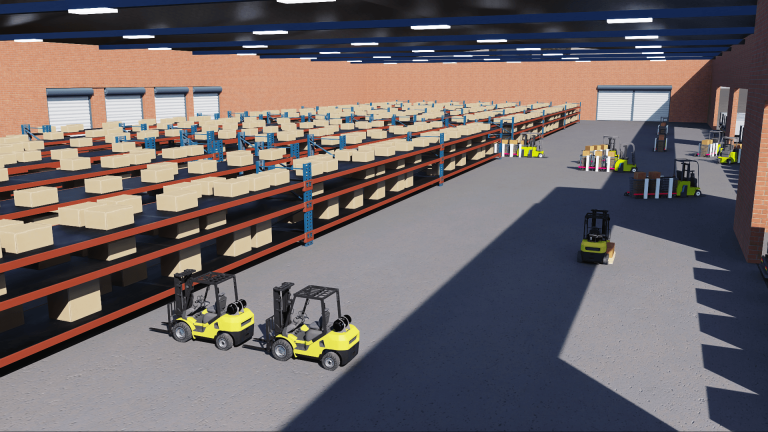
Redefining FMCG Distribution Through Mathematical Optimization
Blending high-fidelity simulation with custom algorithms to maximize warehouse throughput and eliminate operational bottlenecks before a single brick is laid.
Ready to discuss your project?
Let's explore how advanced strategies and solutions can elevate your business.
Get in Touch →Explore more projects
See how we've applied these methods across logistics, manufacturing, and beyond.
View All Projects →