From High-Stakes Guesswork to Data-Backed Certainty
In the metals and steel industry, decision-makers constantly navigate high-stakes uncertainty. Critical choices involving production forecasting, equipment maintenance, and supply chain logistics often rely on a mix of historical data and intuition. A single unplanned equipment failure can halt production for days and cost millions, while a miscalculation in raw material inventory can disrupt the entire supply chain. In this environment, every decision carries significant risk—and the cost of being wrong is immense.
But what if the guesswork could be eliminated? What if you had access to a complete, perfectly labeled dataset for any possible scenario—from a blast furnace malfunction to future supply chain bottlenecks? Today, this is no longer theoretical. Modern digital twin simulation tools such as AnyLogic and anyLogistix enable companies to create high-fidelity virtual replicas of equipment, production lines, and supply chain networks. These advanced models generate large volumes of synthetic data—not as a record of the past, but as a highly detailed preview of multiple potential futures.
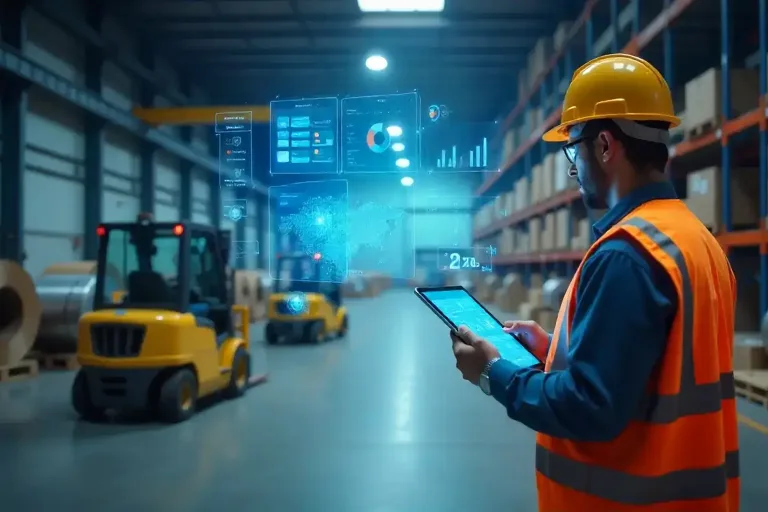
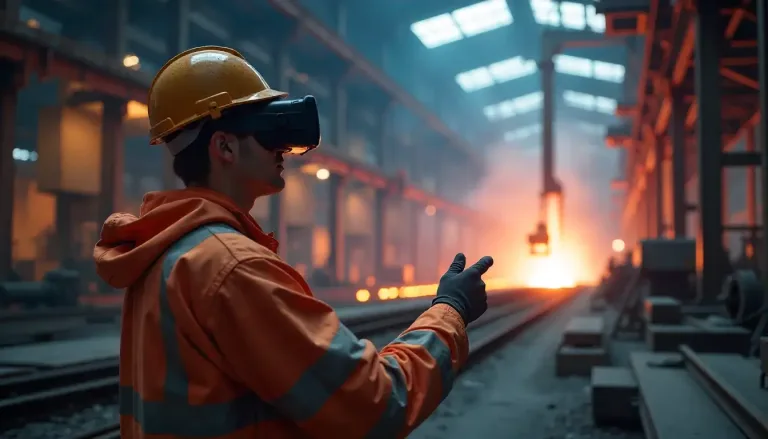
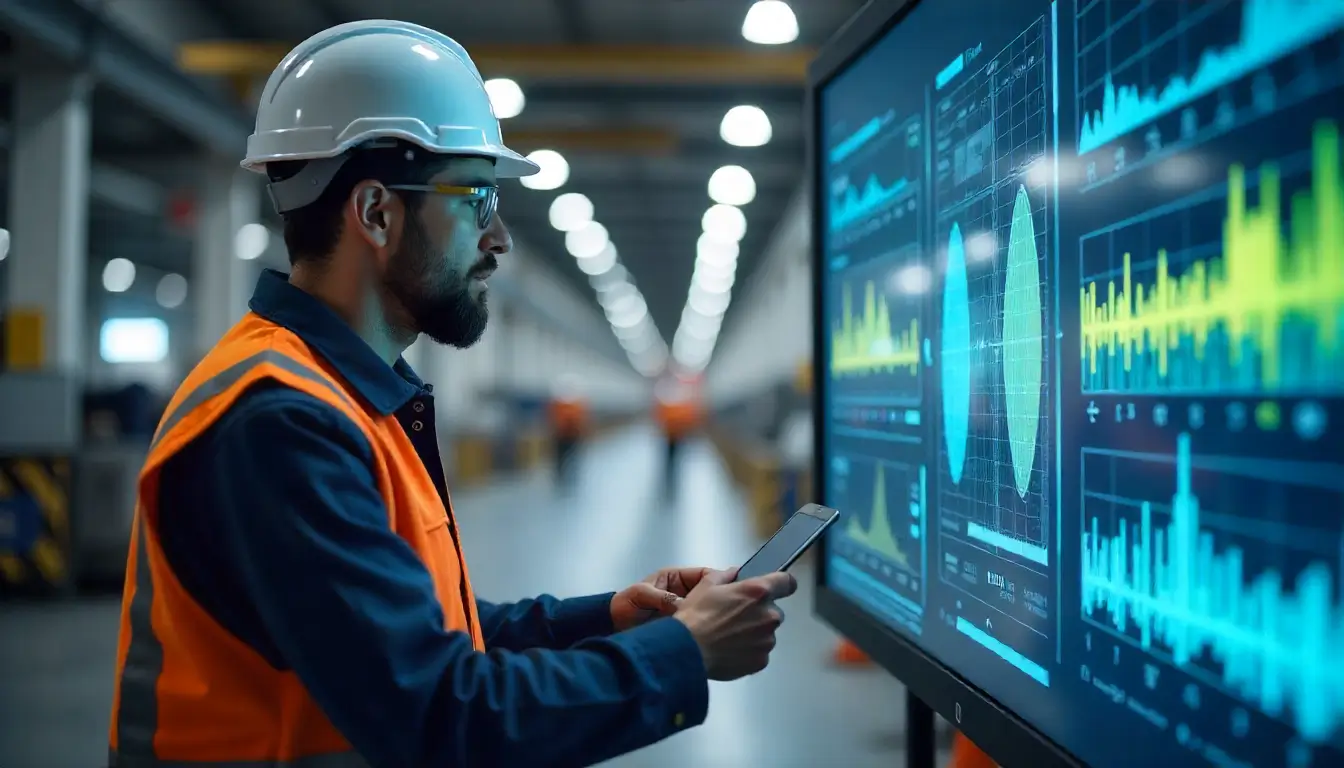
Powered by cutting-edge industrial digital transformation technologies, these simulation environments allow engineers to predict failures before they happen, optimize resource allocation, and test strategic decisions without disrupting real-world operations. A modern steel plant with an engineer analyzing a digital twin simulation on a large screen, reviewing predictive data and virtual equipment models to support proactive decision-making. This article reveals the four most surprising and impactful insights behind this new data-driven approach. It marks a fundamental shift for the steel industry—moving from reactive problem-solving to proactive, intelligence-driven strategic planning.

This article reveals the four most surprising and impactful takeaways of this new data-driven approach. It marks a fundamental shift for the steel industry, moving from a culture of reactive problem-solving to one of proactive, data-backed strategic decision-making
The Four Most Impactful Takeaways of Simulation-Driven Data
By leveraging virtual environments to generate data, the steel industry is unlocking capabilities that were previously unimaginable. Here are the four key breakthroughs that are redefining operational strategy.
Takeaway 1: You Can Now Create Data About the Future, Not Just Record the Past.
Unlike historical data, which is inherently reactive, data generated from digital twin simulations is proactive. It allows companies to model, test, and understand an array of potential future outcomes before they happen. This virtual foresight provides a powerful strategic advantage by turning data into a predictive tool.

Concrete applications of this predictive power are already transforming operations:
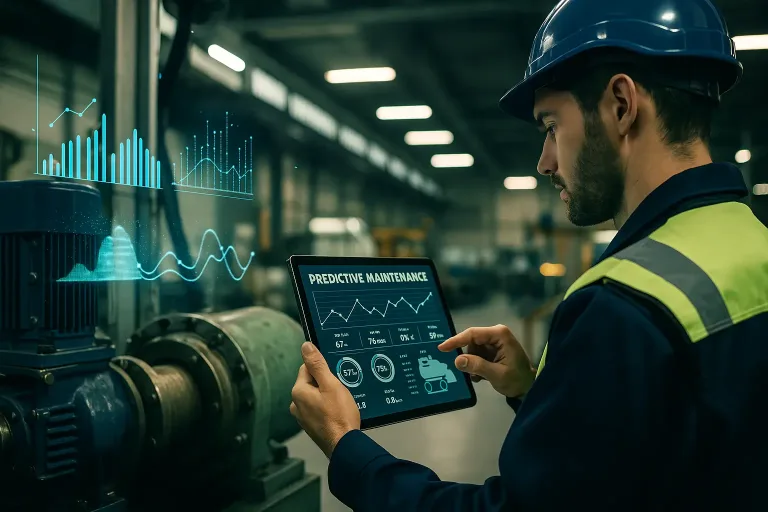
- Predictive Maintenance: Digital twins can track machinery performance data in real-time to identify wear and tear long before a breakdown occurs. This allows operators to predict failures in critical assets like blast furnaces and rolling mills—for example, predicting bearing failure in a rolling stand or detecting early-stage refractory wear in a ladle—and schedule maintenance during non-peak hours, preventing costly, unexpected downtime.
- Supply Chain Resilience: By simulating complex logistical scenarios, plant managers can foresee and mitigate potential supply chain disruptions. This ensures timely deliveries of raw materials and optimized inventory levels, providing stability in volatile markets.
- Lifecycle Forecasting: For steel structures like bridges and wind turbines, virtual models can undergo simulated fatigue assessments. This allows for long-term lifecycle forecasting, predicting the structural health of an asset over decades and enabling proactive maintenance programs.
This proactive approach shifts decision-making from being based on past events to being informed by data from probable futures. It enables bolder, more confident strategic planning. Leaders can now quantify the risk of future supply shocks or accurately forecast the long-term capital expenditure needed for asset maintenance, turning strategic plans into bankable financial models.
Takeaway 2: Your Most Expensive “What-Ifs” Can Be Tested for Pennies on the Dollar.
Real-world experimentation in a steel plant is incredibly expensive and carries significant risk. Testing a new process on a live blast furnace or reconfiguring a production line can jeopardize output, safety, and equipment integrity. This high-risk environment often stifles innovation and makes process optimization a slow, cautious endeavor.
Digital twins and simulations provide a safe, cost-effective virtual testbed where the most ambitious “what-if” scenarios can be explored without consequence. This capability dramatically de-risks innovation and unlocks new efficiencies.

- Process Optimization: Engineers can test the impact of a new, lower-cost coke blend on blast furnace efficiency or model the effect of increasing rolling speed on mill stand longevity—all without risking a single production halt.
- Robotics and Automation: Before deploying physical robots for complex assembly tasks, their AI-driven control software can be rigorously tested and validated in a simulator. This process, known in engineering as software-in-the-loop (SIL) testing, ensures that the AI ‘brain’ of the robot is fully validated before it ever touches physical hardware.
By providing a virtual sandbox for experimentation, this technology allows companies to test bold ideas, refine processes, and achieve new levels of efficiency without jeopardizing safety or production.
Takeaway 3: High-Fidelity “Fake” Data Can Be More Powerful Than Real-World Data.
It sounds counterintuitive, but synthetic data—often called “fake” data—can be more effective for training AI systems than data collected from the real world. Real-world data collection is time-consuming and expensive; a single manually labeled image can cost $6, while a synthetic one can be generated for just 6 cents. This 100x cost reduction fundamentally changes the economics of data acquisition, making it feasible to generate the massive, diverse datasets required to train world-class AI. Furthermore, real-world datasets are often incomplete, contain private information, and are notoriously difficult to label with perfect accuracy.

Synthetic data, generated from a physics-accurate simulation, overcomes these limitations. It is perfectly and automatically labeled, as the simulator knows the precise location, orientation, and properties of every object in the virtual scene. This unlocks two transformative advantages for training robust AI:
- Capturing Rare Corner Cases: Simulators can generate data for rare but critical events—like a catastrophic tundish overflow or a sudden cobble in the rolling mill—that are impossible to capture safely in reality. Training an AI model on these edge cases makes it far more robust and reliable when deployed.
- Achieving Unmatched Diversity with Domain Randomization: To bridge the “sim-to-real gap,” simulators use a technique called domain randomization. This involves procedurally varying thousands of parameters like lighting conditions, material textures, colors, and object placements. This creates an incredibly diverse dataset that teaches the AI to generalize effectively. For a steel plant, this means an AI model trained to spot surface defects on steel coils will be robust enough to perform accurately under the shifting steam, dust, and lighting conditions of the factory floor, not just in a pristine lab environment.
This approach makes it possible to create more accurate and robust AI models than is often achievable with real-world data alone. For applications like automated quality control and robotics, this provides a significant competitive advantage.
Your Physical Assets Can Have a Living Digital Counterpart That Evolves in Real-Time.
A true digital twin is far more than a static 3D model. According to researchers, it is a “virtual replica of a physical object or system… continuously updated with real-time data from sensors and Internet of Things devices.” This is the key difference: it’s not a static blueprint or a 3D CAD model that becomes outdated the moment it’s finished. It is a living, breathing digital counterpart that mirrors the physical asset’s condition, second by second.
This is particularly transformative for the long-term management of steel structures and infrastructure, a core concern for the industry.
- Structural Health Monitoring: For large-span structures like bridges, a digital twin provides real-time monitoring of structural integrity. Sensor data from the physical bridge continuously feeds the virtual model, allowing for immediate analysis of stress, strain, and environmental impacts.
- Material Analysis: Engineers can study material deformation and strain mechanisms on the digital model to understand how the physical structure is aging. This insight is crucial for predicting long-term durability and ensuring safety and compliance over decades.
By creating a “living” asset that evolves alongside its physical counterpart, a digital twin offers unparalleled insight into operational health. This capability allows companies to maximize the lifespan of their most valuable assets while ensuring the highest standards of safety and reliability.
Conclusion: Is Your Next Decision Based on Data or a Calculated Guess?
The ability to generate unlimited, perfectly labeled synthetic data from simulated realities is not just an incremental improvement; it is a fundamental transformation. This technology empowers leaders to move beyond relying solely on historical data and intuition, and astute competitors are already adopting it. It offers a clear, data-backed view into potential futures, de-risks innovation, and creates a living link between physical and digital assets. The critical question is no longer if simulation will reshape the industry, but whether your next multi-million-dollar decision will be a calculated risk or a data-proven certainty.
Our company is at the forefront of this digital transformation. We use cutting-edge simulation tools, AI, and visualization to help leaders in the metals and steel industry unlock new efficiencies, enhance safety, and build a more resilient operational future. Connect with our team for a demonstration and see firsthand how a data-driven, simulated reality can forge a more resilient and profitable future for your operations.